
“A US dollar is an IOU from the Federal Reserve Bank. It’s not backed by gold or silver. It’s a promissory note that doesn’t actually promise anything.” –P. J. O’Rourke
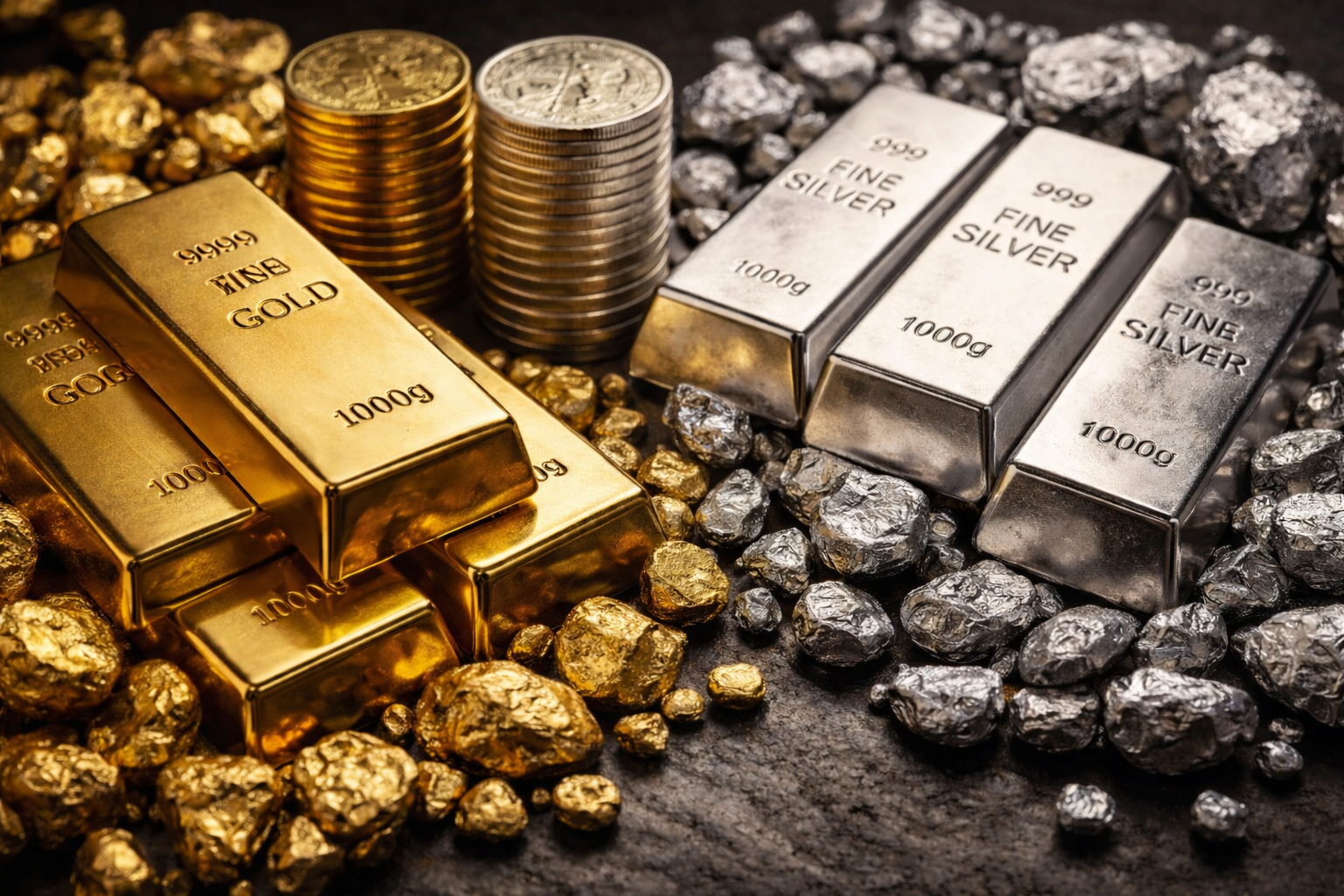
The gold silver ratio history is not merely a record of fluctuating prices between two metals. It is a reflection of power, trust, technology, and the recurring tension between money as a store of value and money as a tool of the state. From ancient empires to modern financial markets, gold and silver have moved together and apart, their relationship revealing far more than headline prices ever could.
Understanding this ratio means understanding how civilizations have defined value itself.
Ancient Origins: Ratio by Decree and Scarcity
In the ancient world, gold and silver were money long before they were commodities. Their exchange ratio was often set by rulers rather than markets, usually reflecting relative scarcity and mining output.
In Ancient Egypt, gold was abundant and silver rare, giving silver a higher relative value. By contrast, in Mesopotamia and later Greece, silver became the dominant monetary metal, with gold reserved for state treasuries and international trade. Ratios varied, but many ancient systems gravitated toward a 12:1 or 13:1 silver:gold exchange ratio.
The Roman Empire formalized this relationship. Under Augustus, the ratio hovered near 12:1, later drifting toward 15:1 as silver supplies increased and coin debasement began. Even then, the ratio served as a barometer of fiscal stress. When silver content declined, confidence followed.
Medieval to Early Modern Period: Bimetallism Takes Hold
During the Middle Ages, silver dominated daily commerce across Europe, while gold facilitated large settlements and cross-border trade. The discovery of New World silver in the 16th century dramatically altered the gold silver ratio history, flooding Europe with silver and pushing the ratio wider.
By the 18th and 19th centuries, formal bimetallism emerged. Nations attempted to fix the gold and silver exchange ratio by law—most famously 15.5:1 in France and later the United States. These efforts repeatedly failed due to Gresham’s Law: undervalued metal disappeared from circulation, while overvalued metal dominated.
Markets, not governments, ultimately dictated the ratio.
The Gold Standard Era: Silver Marginalized
The late 19th century marked a turning point. As major economies adopted the gold standard, silver was effectively demonetized. This shift was not accidental. Gold favored creditors, central banks, and imperial finance. Silver, more abundant and harder to control, lost its formal monetary role.
The gold-silver ratio widened dramatically—often exceeding 30:1 by the early 20th century. This was less a reflection of intrinsic value and more the result of policy decisions. Gold was money by law. Silver became a commodity by decree.
Still, silver retained a monetary shadow role, especially in Asia, where silver standards persisted into the 20th century.
Modern Era: Market Forces and Industrial Demand
After the collapse of Bretton Woods in 1971, both gold and silver were freed from fixed monetary roles. Their prices floated, and the ratio became a true market signal again.
Since then, the gold silver ratio history has been marked by volatility:
- Long-term average: ~60:1
- Extremes:
- 1980 silver spike: ~15:1
- 2020 crisis peak: ~120:1
- 1980 silver spike: ~15:1
Gold today functions primarily as a monetary asset—held by central banks, sovereign funds, and long-term savers hedging against currency debasement. Silver straddles two worlds. It is both monetary metal and industrial input.
This dual role makes silver more volatile—and potentially more asymmetric.
Industrial Use: Silver’s Structural Advantage
Unlike gold, much of silver is consumed. It is used in electronics, solar panels, medical applications, batteries, and advanced manufacturing. As green energy infrastructure expands, silver industrial demand has become a structural driver rather than a cyclical one.
Gold sits in vaults. Silver disappears into products.
This distinction matters. Over time, gold accumulates. Silver depletes.
What Is Driving Values Today?
Several forces are shaping gold and silver prices in the present day:
- Monetary Inflation and Debt Expansion
Persistent deficits, high sovereign debt, and currency debasement continue to drive demand for hard assets. - Central Bank Behavior
Gold purchases by central banks signal declining trust in fiat reserves, particularly the U.S. dollar. - Supply Constraints
New silver supply is largely a byproduct of base metal mining, limiting responsiveness to higher prices. - Energy Transition
Solar, electrification, and digital infrastructure require silver in quantities that were previously unimaginable. - Repricing of Risk
In periods of financial stress, gold leads. Silver follows—often violently.
Historically, extreme gold-silver ratios have not been permanent. They tend to compress, sometimes rapidly, when confidence in financial systems erodes and investors move down the monetary hierarchy from gold to silver.
Why the Ratio Still Matters
The gold silver ratio history is a record of trust cycles. Wide ratios signal fear and hoarding of gold. Narrow ratios signal speculative excess or silver scarcity.
Today’s ratio remains historically elevated by long-term standards, suggesting either gold is overpriced, silver is underpriced—or the monetary system itself is mispriced.
History suggests it is usually the latter.
Gold and silver are not relics. They are mirrors.