
November was not kind to weak convictions.
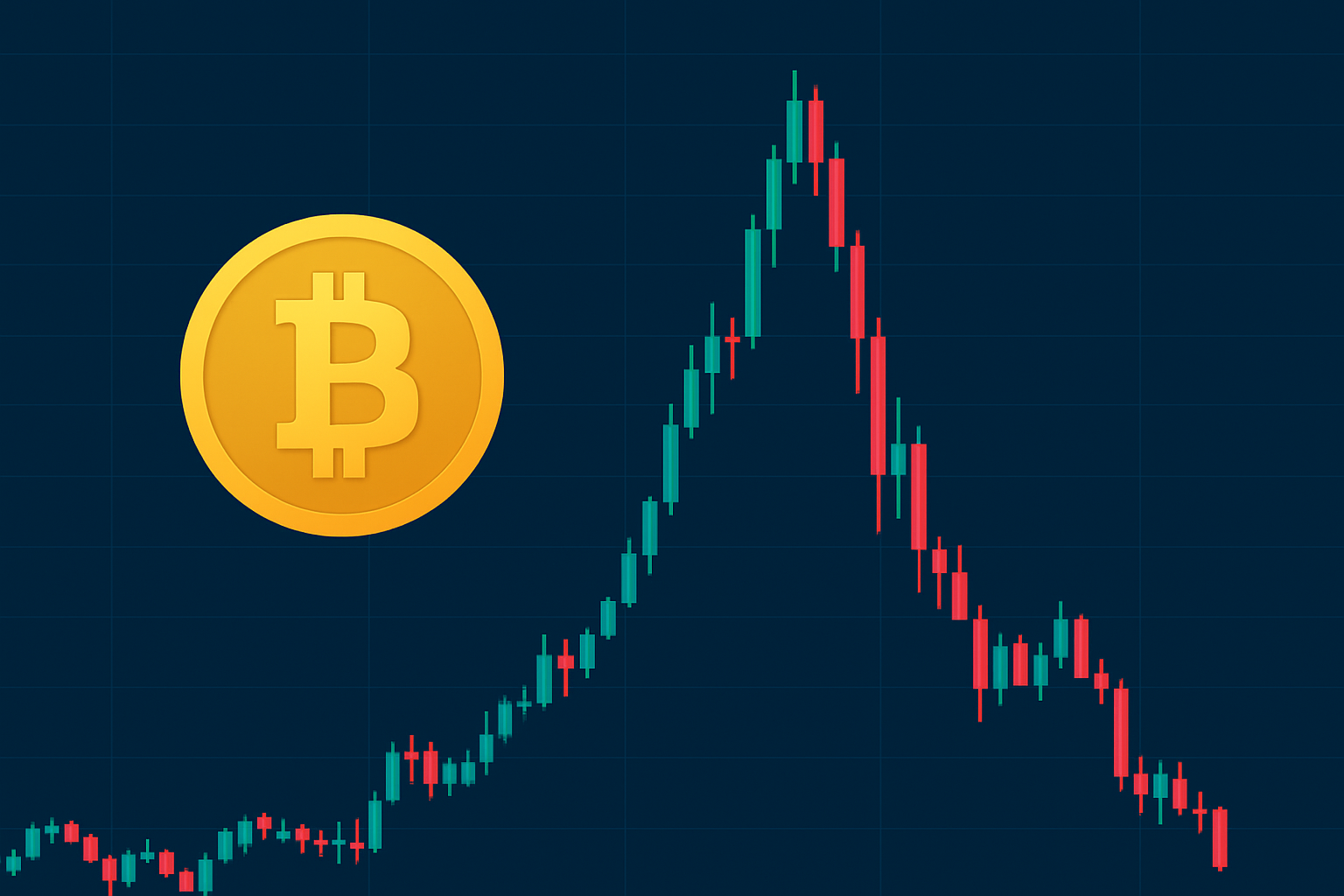
In what felt like a blink, Bitcoin surged toward $126,000, igniting headlines, social feeds, and bold predictions that the next leg up would never end. Then came the reversal. Days later, Bitcoin traded near $86,000, wiping out months of gains and triggering a familiar cycle of panic, disbelief, and doomsday takes.
Crypto Twitter flipped from euphoria to despair. Mainstream outlets rushed to declare the experiment broken—again. Retail investors asked the same question they always do during moments like this: Was this the top?
But the Bitcoin 2025 crash wasn’t a failure.
It was a stress test—of market structure, investor psychology, and Bitcoin’s role as an emerging monetary system.
And stress tests are how systems reveal the truth.
What Actually Drove the Pump
The November run-up didn’t come out of nowhere, nor was it fueled by ideology or grassroots adoption. The primary drivers were structural.
First, ETF inflows and institutional access changed the liquidity landscape. Capital that had previously stayed on the sidelines suddenly had compliant, familiar vehicles to gain exposure. This wasn’t “Bitcoin maximalism”—it was asset allocation.
Second, momentum took over. Markets are reflexive by nature: price rises attract buyers, buyers push price higher, and narratives emerge after the move to justify it. In this phase, Bitcoin became a trade, not a belief.
Finally, much of the inflow was short-term capital chasing liquidity, not long-term holders stacking sats. These participants are fast to enter and faster to exit. They don’t defend levels. They don’t wait out volatility. When conditions change, they leave.
That distinction matters when understanding what came next.
Why the Dump Happened
The Bitcoin 2025 crash wasn’t caused by a single event. It was the convergence of several predictable forces.
Profit-taking came first. Large holders, funds, and early entrants did what rational actors always do after a sharp move up—they locked in gains. When enough participants try to exit at once, price falls.
Next came macro risk-off pressure. Rising rates, dollar strength, and renewed geopolitical tension tightened financial conditions. When liquidity contracts globally, speculative assets feel it first.
Then came the leverage flush-out.
Simply put: too many traders were using borrowed money to bet on higher prices. When Bitcoin dipped, their positions were automatically liquidated, forcing sales into an already falling market. This cascading effect accelerates declines—not because Bitcoin is weak, but because leverage is fragile.
None of this was mysterious. It was mechanical.
The “Tinkerbell Effect” of Money
All money relies on belief.
Fiat currency works because we collectively agree it does. Gold holds value because humans have believed in its scarcity for thousands of years. Equities derive value from faith in future earnings and stable systems.
This is sometimes called the Tinkerbell Effect: belief sustains value.
But Bitcoin is different.
Bitcoin’s belief is rules-based, not political. It doesn’t rely on trust in governments, central banks, or changing narratives. Its monetary policy is enforced by code, not committees.
Fiat belief is enforced by law and taxation. You must use it. Bitcoin belief is earned—through fixed supply, predictable issuance, and resistance to manipulation.
During the Bitcoin 2025 crash, belief wasn’t lost. It was tested.
And tests reveal who understands the system and who was only renting exposure.
The Liberty Angle
Fiat money survives through force and flexibility. Supply can expand. Rules can change. Stability is maintained by intervention.
Bitcoin survives through voluntary adoption and constraint. No one is forced to use it. Its supply is fixed. Its rules are intentionally rigid.
That rigidity is why Bitcoin is volatile.
Volatility is not a bug—it is the cost of freedom in early-stage money. A system that cannot be manipulated will experience sharper price discovery as it finds equilibrium. Over time, as adoption deepens and leverage diminishes, volatility declines.
But in the meantime, the price will swing—and it must.
The Bitcoin 2025 crash reminded everyone that decentralized money does not promise comfort. It promises optionality.
Closing Takeaway
Short-term price action is not the same thing as long-term validation.
The Bitcoin 2025 crash didn’t disprove the thesis—it clarified it. Weak hands exited. Excess leverage was purged. Speculative narratives burned off.
What remained was the same thing Bitcoin has always offered: a transparent, scarce, voluntary monetary network operating exactly as designed.
Volatility reveals weakness.
It does not invalidate the experiment.
If anything, November proved that Bitcoin doesn’t need belief to survive—it needs time.